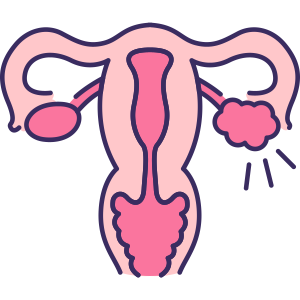

Conditions affecting the Bartholin's glands, which are located on either side of the vaginal opening.
A Bartholin cyst is a condition that involves the Bartholin glands, two small glands located on each side of the vaginal opening. These glands produce lubrication that helps reduce friction during sexual activity. When the ducts that allow this fluid to drain become obstructed, fluid can accumulate and form a cyst. In some cases, the trapped fluid becomes infected, leading to the development of a painful abscess.
What Is a Bartholin Cyst?
A Bartholin cyst forms when the natural drainage pathway of one of the glands becomes blocked. The gland continues to produce fluid, but because it cannot exit through the duct, the fluid collects inside and creates a swelling. Many cysts remain small and cause little to no discomfort, while others grow larger and interfere with daily activities.
How an Abscess Develops
If bacteria enter the blocked duct, the cyst can become infected. Common bacteria—including those found on the skin or in the vaginal area—may multiply inside the cyst, causing increased inflammation. When this occurs, the cyst can quickly turn into an abscess, which is typically much more painful and may require urgent treatment.
Symptoms of a Bartholin Cyst
The symptoms of a Bartholin cyst depend on its size, whether it is infected, and how quickly it forms. Common features include:
- A small, smooth lump near the vaginal opening, often on one side
- Minimal or no pain, especially when the cyst is small
- Mild discomfort during everyday activities such as sitting, walking, or exercising
- A feeling of fullness or pressure in the vulvar area
Symptoms of a Bartholin Abscess
When infection occurs, symptoms become more pronounced and may include:
- A larger, very tender lump that may appear red or warm to the touch
- Intense pain, making movement or contact with the area difficult
- Pain during intercourse, due to pressure on the swollen tissue
- Pain during sitting or walking, often significantly worse than with a simple cyst
- Fever or feeling unwell, which can happen when the infection spreads
- Rapid swelling, as abscesses can enlarge quickly
When to Seek Medical Care
Although small, painless cysts may resolve on their own, both cysts and abscesses can lead to complications if untreated. Medical evaluation is recommended to confirm the diagnosis, rule out other conditions, and determine the best treatment. Management may include warm compresses, drainage procedures, or antibiotics if infection is present.